







Write once. Get found everywhere.
Guides on putting a blog on the site you already have, and getting it read by Google and AI search alike.

Blog Posts vs Service Pages: What Should Your Website Publish?
Compare blog posts vs service pages, match each format to search intent, and connect educational articles to useful service pages.
More posts

How to Write Better Blog Titles That Earn Relevant Clicks
Write better blog titles by matching search intent, using a clear benefit, placing keywords naturally, and setting accurate expectations.

How to Measure Blog SEO Performance with Google Search Console
Measure blog SEO performance with Google Search Console impressions, clicks, click-through rate, queries, and page-level comparisons.

How to Write Blog Calls to Action That Convert Readers
See practical blog call to action examples and learn how to match CTA wording, placement, and next steps to a reader's intent.

Internal Linking for Blogs: A Practical Strategy for SEO
Build an internal linking strategy for blogs that helps readers discover related content and clarifies page relationships for search engines.

How to Refresh Old Blog Posts and Improve Their SEO
Refresh old blog posts by reviewing search intent, outdated facts, titles, internal links, and Search Console performance before republishing.
A Simple Blog Post Outline Template That Keeps Articles Focused
Use this blog post outline template to structure search intent, key headings, examples, internal links, FAQs, and a useful call to action.

How to Find Long-Tail Keywords for Your Business Blog
Learn how to find long-tail keywords for a business blog using customer questions, search suggestions, competitor research, and intent checks.

Local SEO Blog Ideas That Help Bring Nearby Customers
Explore local SEO blog ideas that answer customer questions, demonstrate local expertise, and guide nearby customers toward relevant services.
How to Build a Content Calendar for a Small Business
Create a small business content calendar with practical topic ideas, keyword targets, a realistic publishing schedule, and a monthly review process.
Enable Preview Mode for Authors in a Headless Blog with CMSkite
Learn how to set up a secure, author‑friendly preview mode for a headless blog using CMSkite, from API endpoint to JWT protection and SEO metadata.
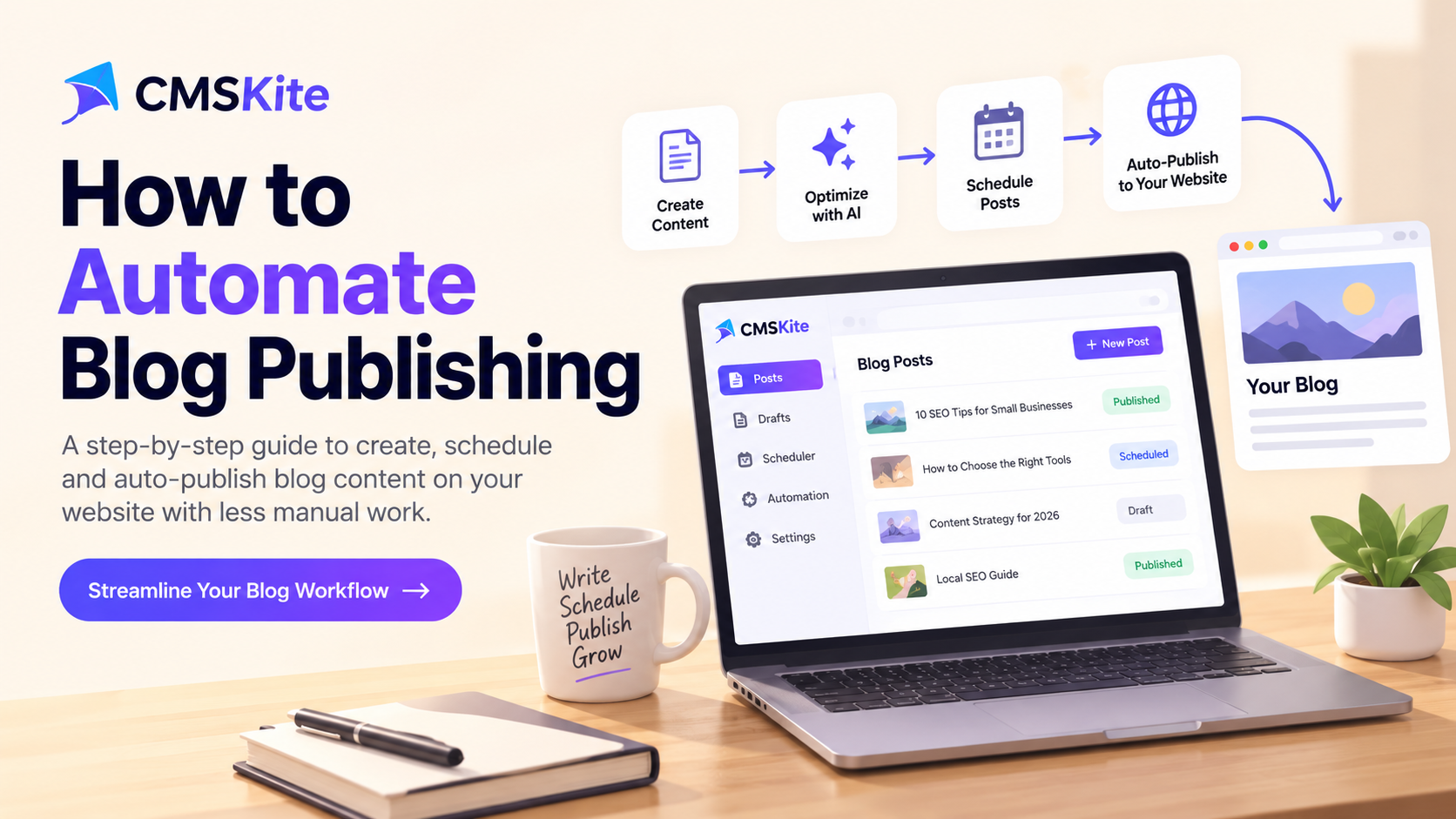
How to Automate Blog Publishing
Learn how to automate blog publishing with a practical workflow for content planning, AI-assisted drafts, SEO checks, approvals, scheduling, and performance tracking.
Step‑by‑Step Guide to Automating Image Optimization in Headless Blog Workflows with CMS Kite
Learn how to connect CMS Kite’s media API with build‑time and edge‑runtime pipelines to serve responsive, SEO‑friendly images in headless blogs.
Is Server‑Side Rendering Necessary for SEO in a Headless Blog?
Learn when server side rendering, static generation, or client rendering best serve a headless blog’s SEO, with practical Next.js examples using CMSKite.
Optimizing Images in a Headless Blog with Automatic CDN Delivery
A step‑by‑step guide for developers to boost image performance on headless blogs using CMSKite, Next.js, and CDN features.
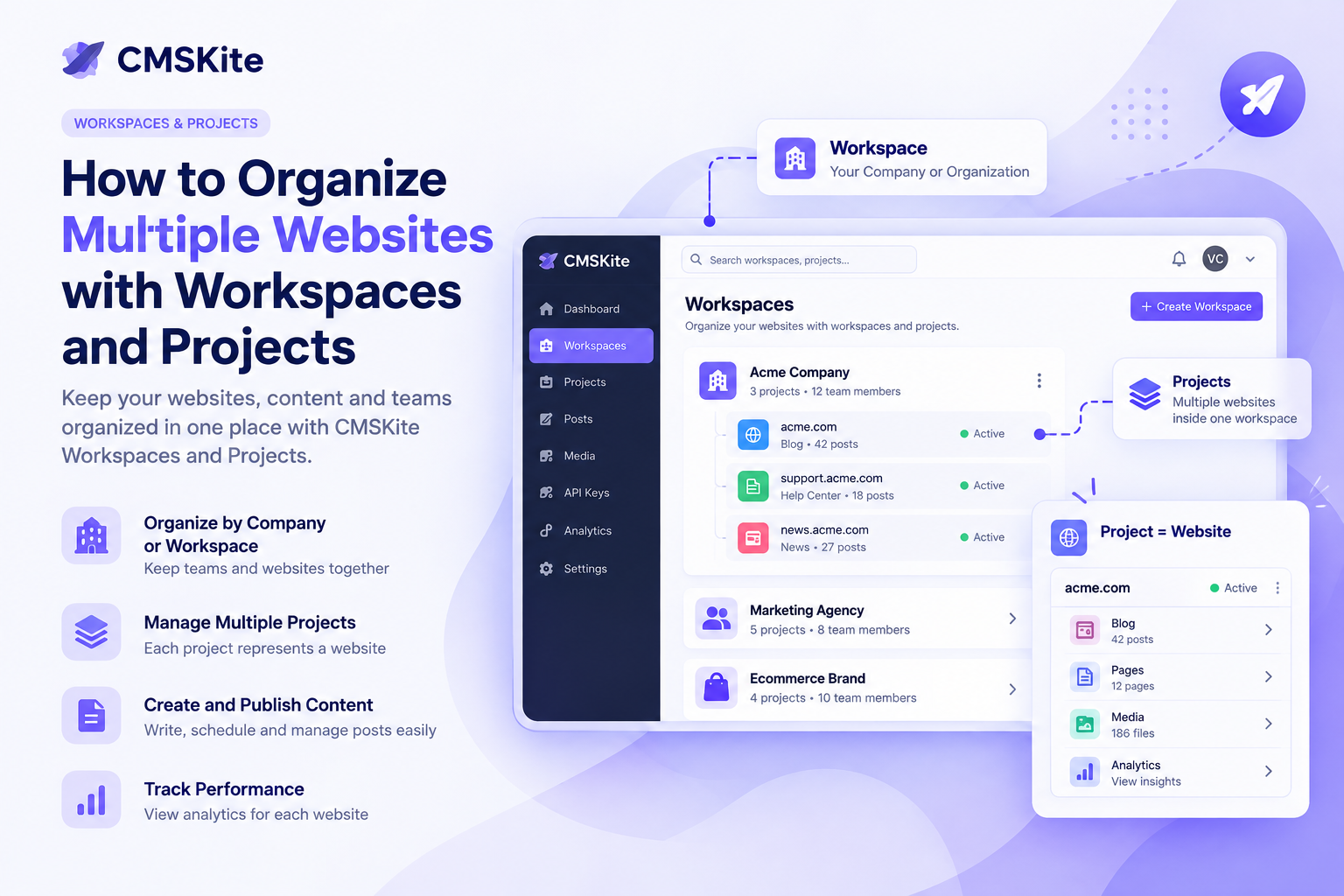
How to Manage Multiple Websites with Workspaces
Learn how workspaces and projects help companies organize multiple websites, brands, and content in one clean and scalable structure.
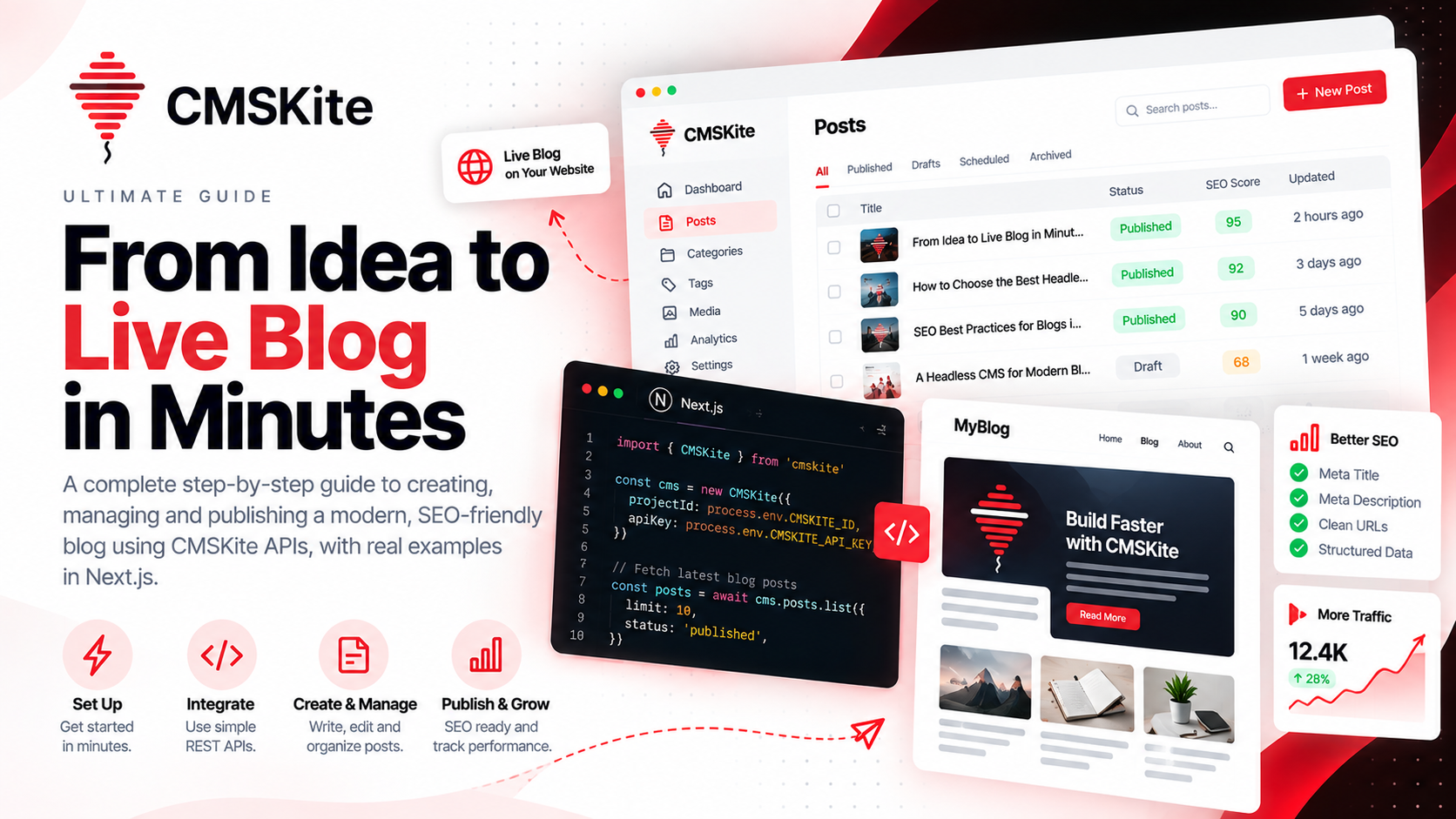
Next.js Blog Architecture: Build a Scalable Blog with a Headless CMS
Learn how to build a scalable Next.js blog with a headless CMS, clean APIs, SEO, media, analytics, search, and maintainable content architecture.
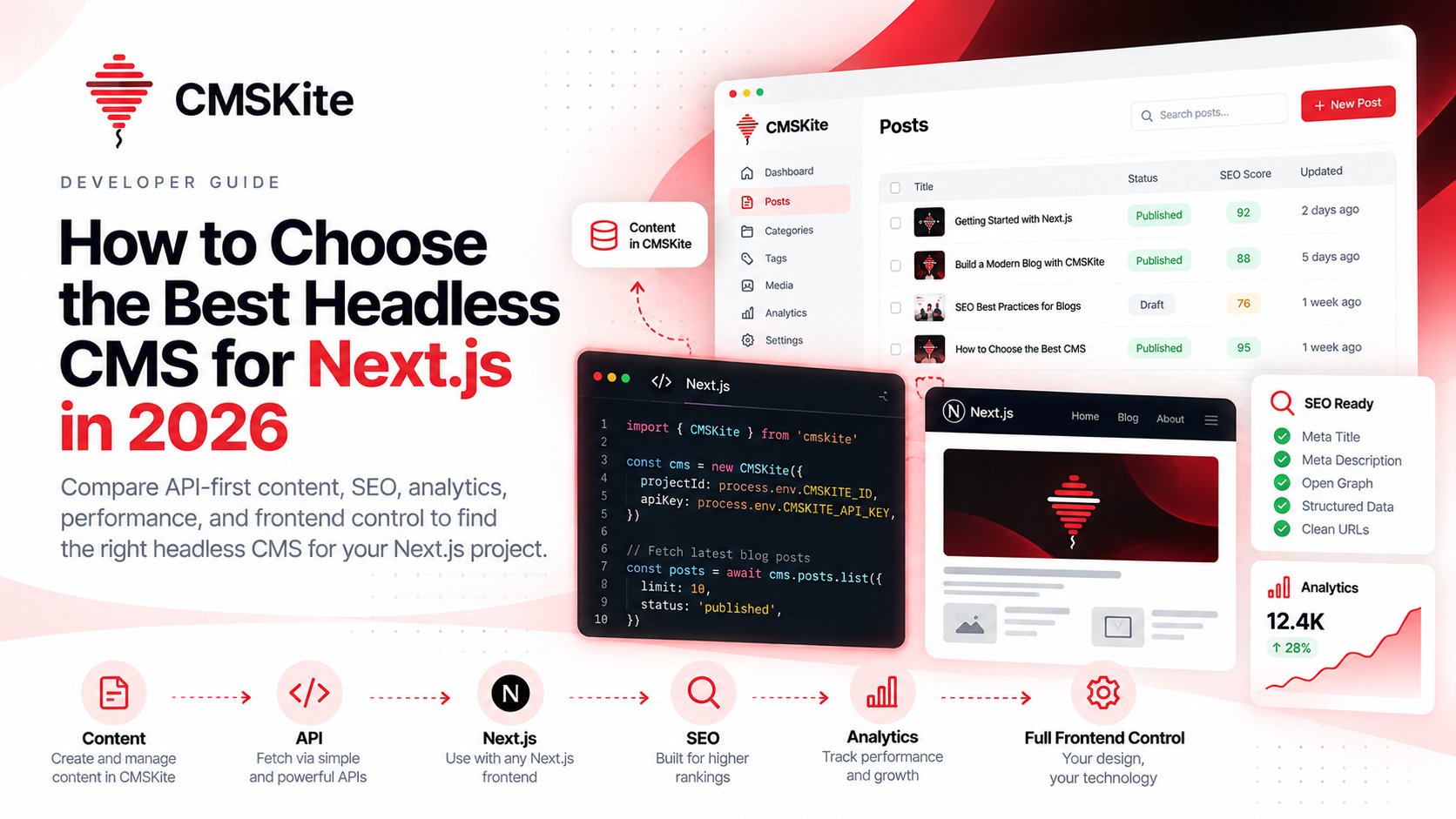
How to Choose the Best Headless CMS for Next.js in 2026
A practical guide to choosing a headless CMS for Next.js, covering APIs, SEO, analytics, media, developer experience, scalability, and frontend control.
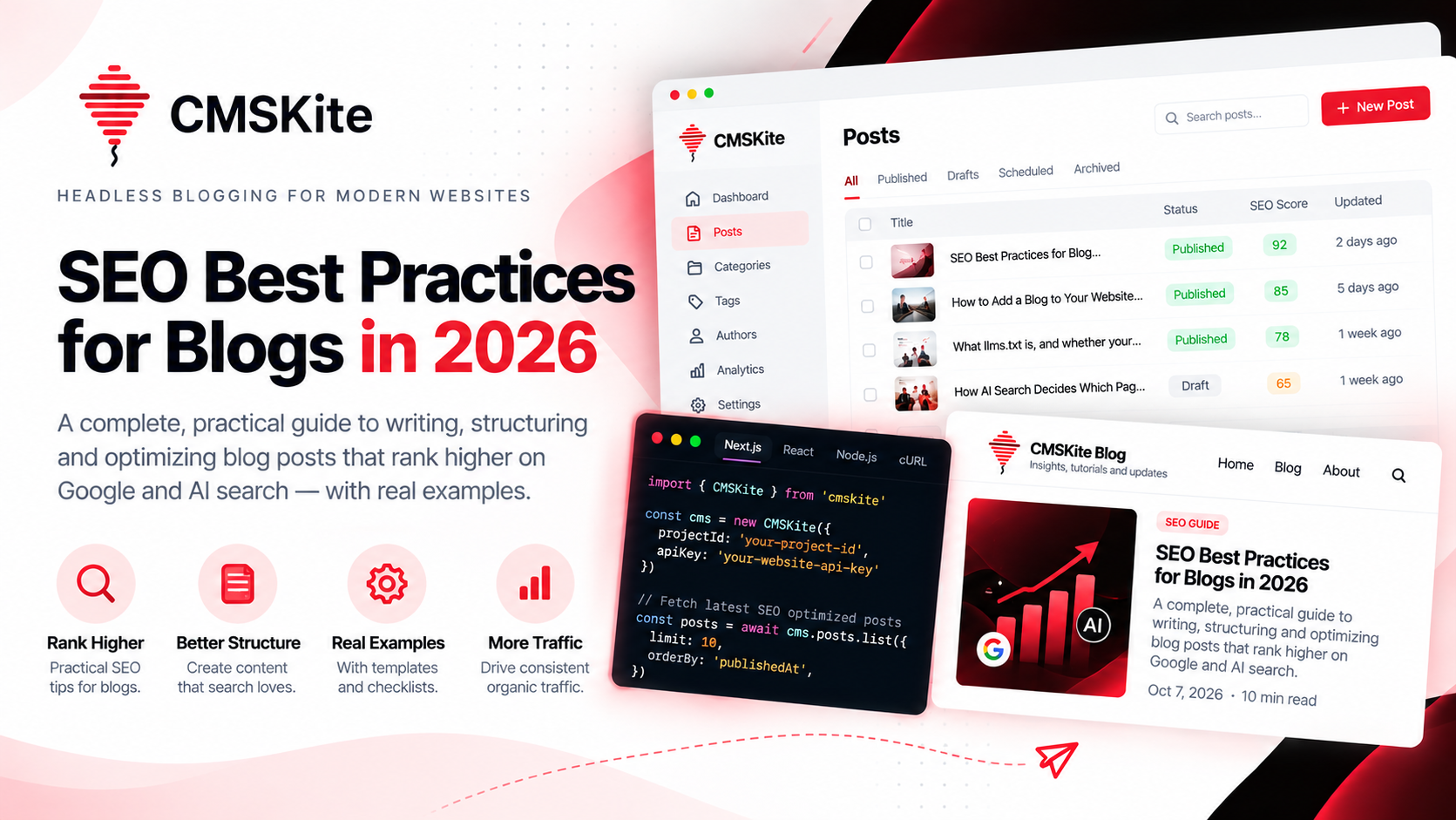
SEO Best Practices for Blogs in 2026: A Practical Guide
A practical 2026 guide to blog SEO: search intent, titles, internal links, structured data, AI search, technical SEO, content updates, and measurement.
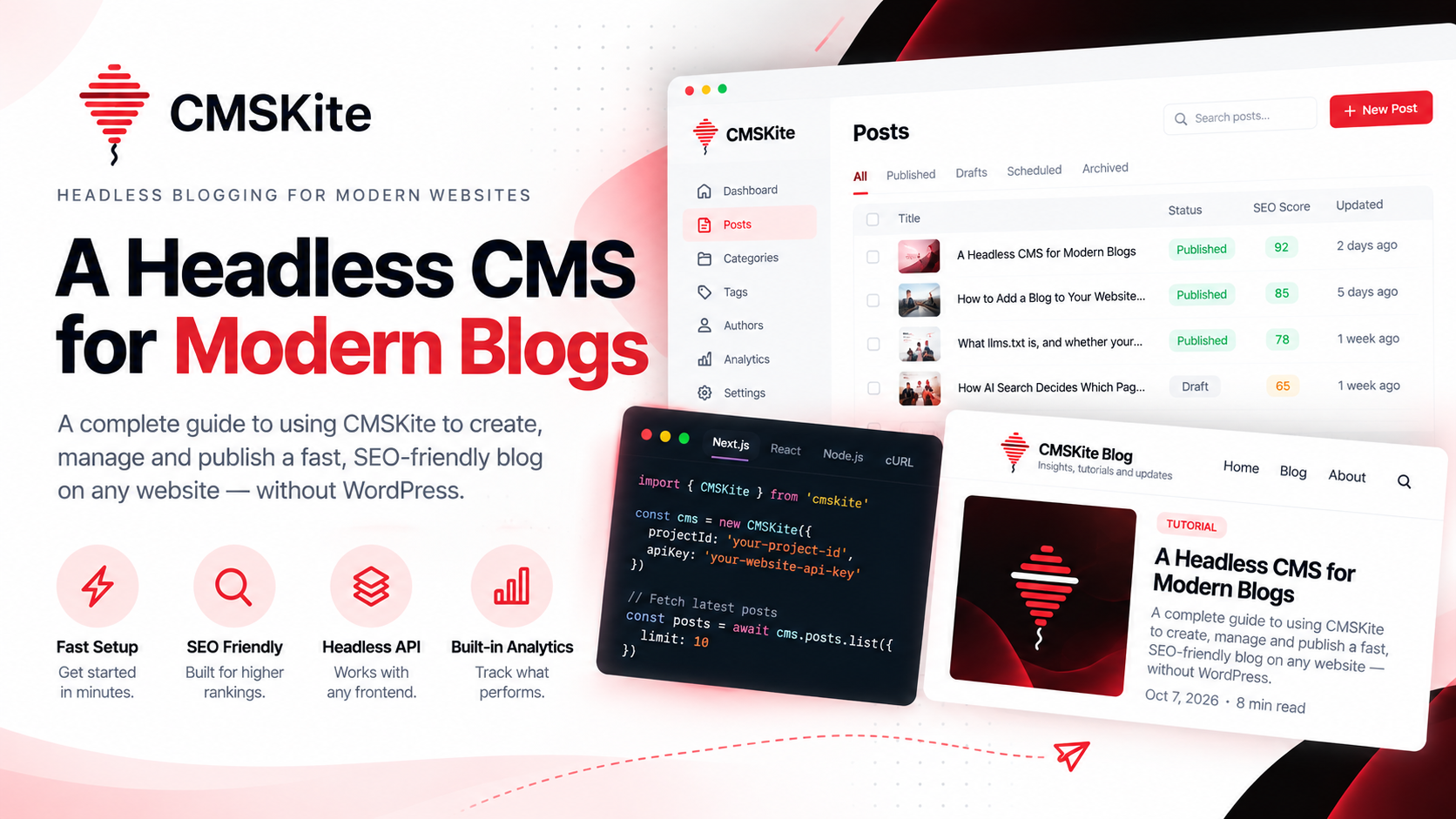
Headless Blog API Explained: How Modern Websites Manage Content
Learn how a headless blog API separates content from your frontend, why modern developers use this architecture, and how CMSKite fits the workflow.
How to add a blog to your website without WordPress
You already have a website. You want a blog on it, in your design, without a second site to host and patch. Here is the short way.
What llms.txt is, and whether your site needs one
A plain-text map of your site for language models. It takes ten minutes to write. Here is what goes in it and what it does not do.
How AI search decides which pages to cite
Assistants that browse still start from pages a crawler could read. What makes a page easy to quote, and what quietly hides it.
Does a blog still help SEO?
Short answer: a blog that answers real questions does. A blog that exists because someone said you need one does not.
A blog in Next.js with the CMSKite SDK
Two pages, one client, rendered on the server and cached. The whole integration in about forty lines.
Headless CMS or WordPress for a small business site?
WordPress is a whole website. A headless CMS is only the content. Which one you want depends on whether you already have a site.