How to Write an Effective Job Description: A Practical Guide for Employers
Learn how to write a clear and effective job description with essential responsibilities, qualifications, skills, and reporting details. Explore practical tips for employers and recruiters, and use HRHelpBoard’s Job Description Generator to help prepare structured job descriptions.
3 min read
How to Write an Effective Job Description: A Practical Guide for Employers
A well-written job description helps employers communicate role expectations, attract relevant candidates, and support a more organized recruitment process. It explains what a position involves, which skills are required, and how the role contributes to the organization.
For recruiters and hiring managers, creating a job description is an important step before advertising a vacancy. Clear, specific, and realistic information helps candidates understand whether the opportunity matches their experience and career goals.
What Is a Job Description?
A job description is a document that outlines a position's purpose, key duties, responsibilities, qualifications, skills, and reporting relationships. It provides candidates with an overview of the role and helps hiring teams communicate their expectations consistently.
Job descriptions can also support onboarding, performance management, workforce planning, and the development of role-specific evaluation criteria.
Key Components of a Job Description
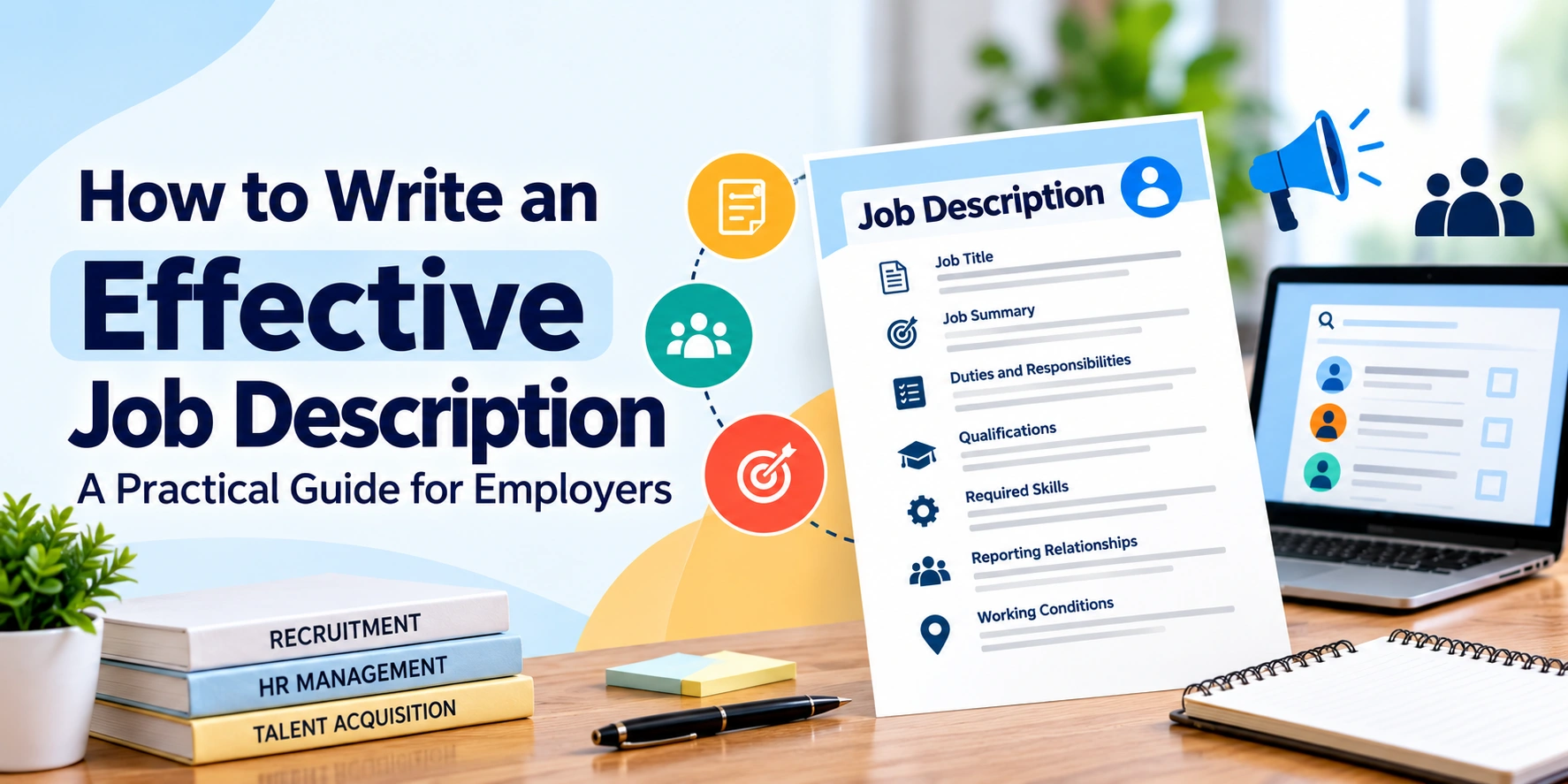
An effective job description generally includes the following elements:
Job title: Use a clear, recognizable title that accurately reflects the position.
Job summary: Briefly explain the purpose of the role and its contribution to the organization.
Duties and responsibilities: Describe the main tasks and expected outcomes. Use specific action verbs and prioritize the most important responsibilities.
Qualifications and experience: Identify the education, professional experience, certifications, or other requirements genuinely needed for the position.
Required skills: Include relevant technical, communication, organizational, or problem-solving skills.
Reporting relationships: Explain who the employee reports to and, where relevant, which teams or stakeholders they work with.
Working conditions and location: State the work arrangement, location, schedule, or travel requirements where applicable.
Steps to Write a Job Description
1. Understand the Role
Consult the hiring manager to identify the position's purpose, main responsibilities, expected outcomes, and place within the team. Confirm which requirements are essential and which are preferred.
2. Choose an Appropriate Job Title
Use a title candidates are likely to recognize and search for. Avoid vague internal terminology that may not communicate the role clearly to external applicants.
3. Write a Concise Job Summary
Explain why the position exists and what the successful candidate will contribute. Keep the summary focused on the role rather than making broad claims about the organization.
4. List Responsibilities Clearly
Describe the tasks that occupy most of the employee's time. Use straightforward language and avoid unnecessary jargon. Make sure the listed responsibilities reflect the actual position.
5. Specify Qualifications and Skills
Separate essential requirements from desirable qualifications. Avoid including requirements that are unrelated to successful job performance, as these may discourage suitable applicants from applying.
6. Review for Clarity and Inclusion
Use accessible language and focus on job-related criteria. Check that the description does not contain contradictory requirements, unrealistic expectations, or unnecessary barriers to qualified candidates.
7. Proofread Before Publishing
Confirm the job title, responsibilities, location, reporting structure, and application instructions. Ask the hiring manager to review the final description before the vacancy is advertised.
Use a Job Description Generator
Preparing job descriptions from scratch can take time, particularly when an organization is recruiting for several roles. A job description generator can help employers organize role information into a structured draft.
HRHelpBoard offers an online Job Description Generator that employers and recruiters can explore when preparing job descriptions. Review the generated content carefully, confirm that it reflects the actual position, and make any necessary changes before publishing the vacancy.
An automated draft should be treated as a starting point rather than a substitute for the hiring manager's knowledge. Job-specific responsibilities, required qualifications, and organizational expectations should always be checked by a person familiar with the role.
Common Job Description Writing Mistakes
Avoid these common problems when preparing a job description:
Using a vague job title that does not reflect the position.
Listing too many responsibilities without prioritizing them.
Mixing essential qualifications with optional preferences.
Including unrealistic experience or skill requirements.
Using unclear language or unexplained technical terms.
Leaving out important details about location or work arrangements.
Publishing the description without reviewing it with the hiring manager.
Conclusion
An effective job description communicates the purpose of a role, its key responsibilities, and the qualifications needed to perform it. By consulting hiring managers, using clear language, setting realistic requirements, and reviewing the final draft, employers can create more useful recruitment documents.
Employers and recruiters can also explore HRHelpBoard's Job Description Generator to help structure an initial draft and then adapt it to their organization's specific hiring needs.
- #job-description